Turkish Kebab and Takeaway Food
 Save
Turkish kebab and takeaway food covers grilled meats, flatbreads and accompaniments that together make up one of the most popular food choices across the UK. Efes Kebab helps you understand what makes each option different, how to choose what suits you and how to enjoy it properly. After reading, you will recognise the main styles, know what to expect from each and feel confident ordering or preparing Turkish food at home.
Recognise the main kebab styles and what sets them apart
Döner kebab is cooked on a vertical rotating spit and sliced thinly as it turns. The meat develops a crisp outer layer while staying tender inside. Shish kebab is marinated chunks of meat threaded onto skewers and grilled over charcoal. Adana kebab is hand-minced lamb or beef mixed with tail fat and spices, pressed onto a wide flat skewer and grilled until the edges char.
Kofte are seasoned meatballs or patties, shaped by hand and grilled or pan-fried. Iskender kebab is sliced döner served over pieces of pide bread, topped with tomato sauce and melted butter, with yogurt on the side. Each style tastes different because of how the meat is prepared, seasoned and cooked.
Work out which suits you today
Choose döner when you want something quick and handheld, shish when you prefer lean meat with visible char, Adana when you want bold spice and a softer texture. Kofte work well for children or anyone who finds whole cuts too chewy. Iskender is a sit-down meal that needs a knife and fork.
Understand how marinades and spices shape the flavour
Marinades for shish kebab usually combine yogurt, olive oil, lemon juice, garlic and spices such as cumin, paprika and black pepper. The yogurt tenderises the meat and helps the spices cling. Adana kebab relies on Urfa biber, a mild dried chilli with a smoky, slightly sweet flavour, mixed directly into the mince along with salt and sometimes cumin.
Döner seasoning varies but often includes paprika, oregano, thyme and garlic powder. The spice blend goes into the layers of meat as the spit is built, so every slice carries the same flavour. Kofte usually contain parsley, onion, cumin and sometimes cinnamon, all kneaded into the mince before shaping.
Learn what comes with your kebab and why it matters
Most takeaway kebabs arrive with salad, sauce and bread. The salad — shredded lettuce, tomato, onion, red cabbage — adds crunch and freshness that balances the richness of the meat. Sauces include chilli sauce for heat, garlic sauce for sharpness and yogurt-based cacik for cooling.
| Accompaniment | What it does | When to use it |
|---|---|---|
| Chilli sauce | Adds heat and acidity | When the meat is mild or fatty |
| Garlic sauce | Cuts through richness | With döner or fried items |
| Cacik or yogurt | Cools spice and balances salt | With Adana or spiced kofte |
| Pickled chillies | Sharp, vinegary contrast | Between bites to reset your palate |
Bread varies: pide is a soft, slightly chewy flatbread baked in a stone oven; lavash is thinner and tears easily; a wrap or tortilla is common in takeaways for convenience. The bread soaks up juices and sauces, so it is part of the meal rather than just a container.
Choose between eating in, taking away or cooking at home
Eating in a Turkish restaurant means the food reaches you hot, the bread is fresh from the oven and you can ask for extra sides or adjust spice levels before the plate is made. Takeaway loses a little heat and crispness during travel, but wrapping keeps steam in and prevents the bread from drying out. If the journey is longer than ten minutes, the salad may wilt slightly and sauces can soak into the bread.
Cooking at home gives you control over meat quality, marinade strength and portion size, but requires equipment — skewers for shish, a hot grill or griddle for kofte, a meat thermometer to check doneness. You can find detailed steps in our guide on making döner kebab meat at home without a spit.
What to check before ordering
Ask how long the food will take if you are collecting, so you arrive when it is ready rather than waiting. Check whether sauces come separately or inside the wrap — separate means you control how much goes on. Find out if the restaurant offers half-portions or mixed plates, which let you try two styles in one order without waste.
Store and reheat leftovers safely
Refrigerate leftover kebab meat within two hours of cooking. Remove it from the wrap or container, discard any wilted salad and store the meat in a sealed container. It keeps for up to two days. Reheat thoroughly until steaming hot all the way through — a microwave works but can make the meat rubbery, so cover it with a damp paper towel to keep moisture in.
A frying pan or oven gives better texture: spread the meat in a single layer, cover with foil and heat at a moderate temperature until hot, then uncover briefly to crisp the edges. Do not reheat more than once. Bread reheats poorly, so buy or make fresh when you reheat the meat.
Recognise common mistakes and how to avoid them
Ordering too much is the most frequent problem. A large döner wrap or a full mixed grill often serves two people comfortably, yet many order one each and leave food. Start with a smaller portion and add sides if you are still hungry — most places offer rice, chips or extra bread.
Ignoring the accompaniments means missing half the meal. The salad and sauces are designed to balance the meat, not just fill space in the container. Try each sauce separately first, then combine them to find what you prefer. Our article on what to serve with Turkish kebabs covers eight accompaniments that complete the meal.
Reheating in the original packaging causes sogginess and uneven heating. Always transfer food to a microwave-safe dish or an oven tray. Expecting every takeaway to taste like the last is unrealistic — meat quality, spice blends and cooking methods vary between restaurants, even within the same town.
Decide what to try first if you are new to Turkish food
- Order a small chicken shish kebab wrap with mild sauce and a simple salad — chicken is leaner and less chewy than lamb, and a wrap is easier to handle than a plate.
- Taste the meat on its own before adding sauce, so you understand the base flavour and can judge how much sauce you need.
- Try one new item each time you order: add Adana kebab next, then a mixed grill, then a rice dish such as pilaf with your kebab instead of bread.
- Ask the staff what they recommend for someone who prefers mild or bold flavours — most are happy to guide you and may offer a sample of a sauce or a small taste of kofte.
If you are uncertain about a dish, read our explanation of what makes Adana kebab different from other Turkish kebabs before deciding.
Understand what lahmacun brings to the table
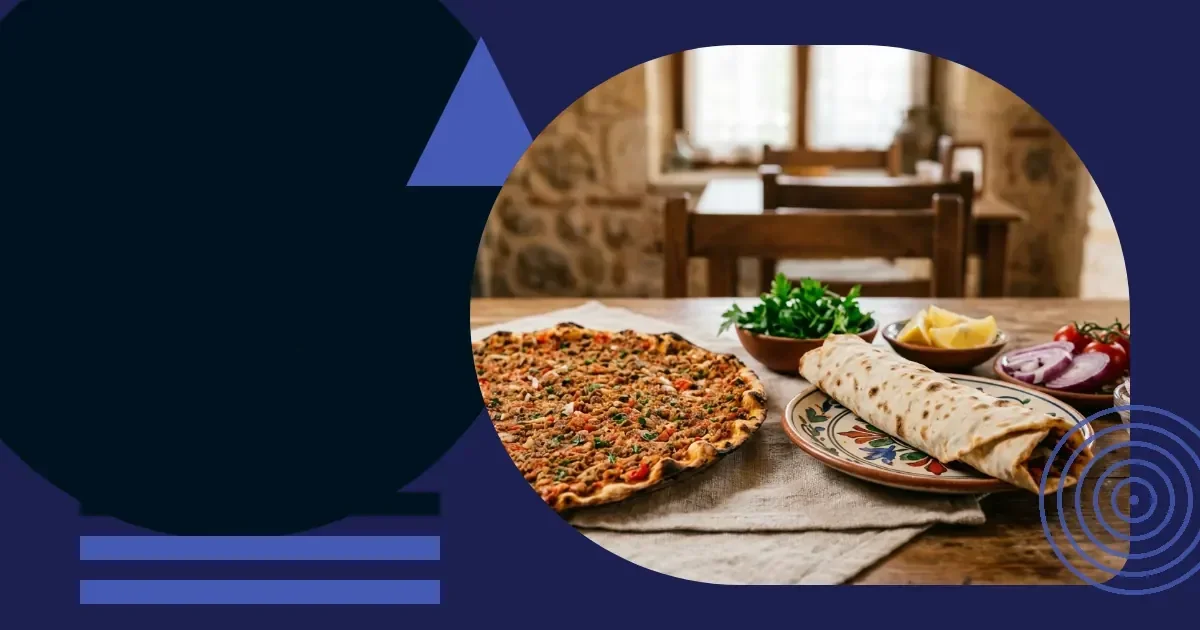
Lahmacun is a thin, crisp flatbread topped with minced lamb or beef, tomatoes, onions, parsley and spices, baked at high heat until the edges curl. It is not a kebab — no skewer, no chunks of meat — but it appears on most Turkish takeaway menus alongside them. The topping is spread thinly, so the dough stays light and tears easily.
Eat it by adding fresh parsley, a squeeze of lemon and sometimes a few slices of raw onion or tomato down the centre, then rolling it tightly from one edge. The roll is held in one hand and eaten in sections. It works as a starter before a main kebab or as a lighter alternative when you want something savoury without the heaviness of grilled meat.
Know where to go next once you are comfortable
Once you recognise the main styles and have tried a few, explore regional variations. Some restaurants offer Urfa kebab, which uses a slightly different spice blend and a leaner mince than Adana. Others serve beyti, a kebab wrapped in lavash with tomato sauce and yogurt, similar to Iskender but rolled instead of layered.
Look for places that make their own bread daily — the difference in texture and flavour is immediate. Try a meze platter before your kebab: small dishes of hummus, baba ghanoush, stuffed vine leaves and olives that give you a broader sense of Turkish food beyond grilled meat.
If you enjoy cooking, invest in metal skewers and a cast-iron griddle, which let you replicate restaurant results at home. Practice shaping kofte evenly so they cook at the same rate, and learn to judge doneness by touch rather than relying only on a thermometer.
#Döner kebab #Shish kebab #Adana kebab
Download PDF: Turkish Kebab Confidence Checklist PDF, 29 KB
Further reading
Frequently asked questions
Where does the thin bread for a döner wrap come from originally?
Lavash, the thin flatbread used for wraps, comes from Armenia and the wider Caucasus region but has been adopted across Turkish cuisine. Many takeaways in the UK now use tortillas or other soft wraps for convenience.
How much spice should I expect in a standard Adana kebab?
Adana kebab has a warm, smoky heat from Urfa biber rather than sharp chilli burn. Most people find it comfortably spicy but not overwhelming. If you are sensitive to heat, ask for a milder version or choose chicken shish instead.
Can I freeze cooked kebab meat and reheat it later?
Yes, cooked kebab meat freezes well for up to three months if stored in an airtight container. Thaw it in the fridge overnight and reheat thoroughly until steaming hot. Texture may be slightly drier than fresh, so add a splash of water or oil when reheating.
What is the difference between pide bread and the flatbread used in wraps?
Pide is a thicker, boat-shaped flatbread baked in a stone oven with a slightly chewy texture, often used as a base for Iskender kebab. Lavash or tortilla wraps are thinner and more pliable, designed to hold fillings and be eaten by hand.
Is there a vegetarian option that tastes similar to a kebab?
Grilled halloumi skewers or falafel wraps offer a similar char and seasoning to meat kebabs. Halloumi has a firm texture and holds up on a skewer, while falafel provides a spiced, savoury filling that works well with the same sauces and salad.
Why does restaurant döner taste different from the frozen version at the supermarket?
Restaurant döner is cooked fresh on a vertical spit, which crisps the outside while keeping the inside tender. Frozen döner is pre-cooked and often contains fillers and preservatives, then reheated, which changes the texture and flavour significantly.