Understanding Iskender kebab: 4 layers that turn döner into a plated meal
 Save
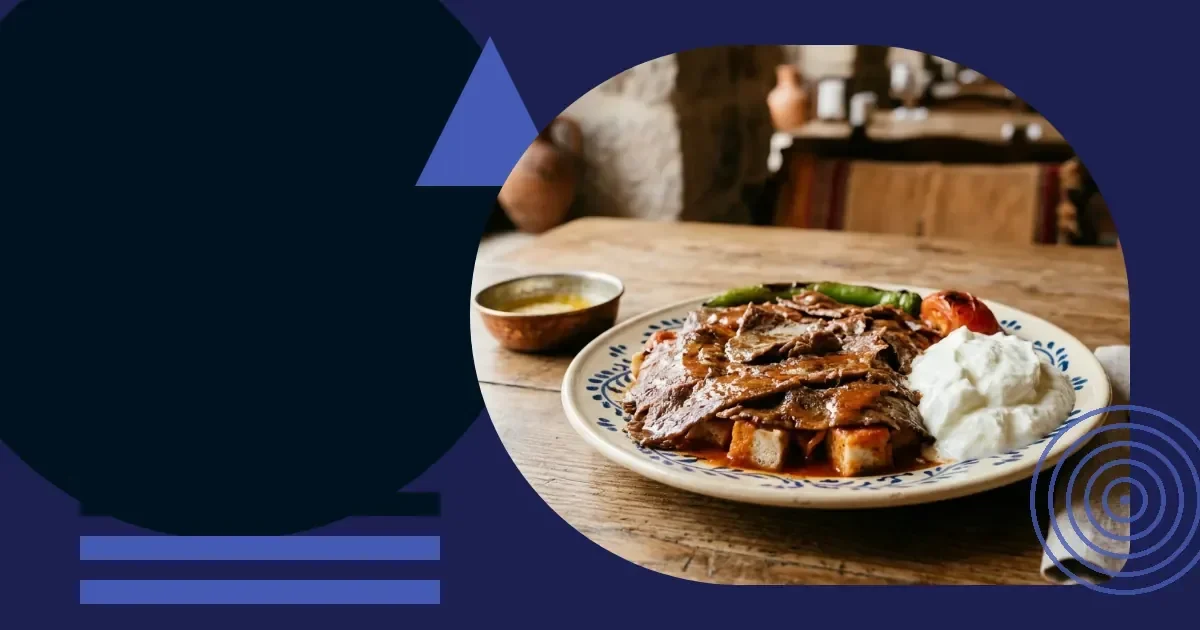
Iskender kebab is a plated Turkish dish built from döner meat served over torn pide bread, covered with tomato sauce and yogurt, then finished with hot melted butter poured at the table. It transforms the handheld döner wrap into a knife-and-fork meal with a richer flavour and softer texture. You can order it at many Turkish restaurants in the UK, or assemble your own version at home if you understand how the layers work together. Efes Kebab walks you through the structure, the regional history and what to expect when you eat it.
Recognising the dish by its assembly
Iskender arrives on a wide plate, never in a wrap. The base is torn pieces of pide bread, soaked in meat juices and tomato sauce. Thin slices of döner lamb sit on top, followed by a stripe of thick yogurt and a ladle of bright red tomato sauce. The final step happens at your table: a server pours sizzling butter over everything, sometimes browned with a pinch of chilli flakes.
The heat melts the yogurt slightly and the butter pools at the edge of the plate. You eat it with a fork, mixing the layers as you go. The bread at the bottom softens completely, more like a savoury pudding than flatbread.
What makes it different from standard döner
A döner wrap holds the meat, salad and sauce inside bread you can carry. Iskender puts the bread underneath and turns it into part of the dish rather than a container. The yogurt is plain and unsweetened, thicker than the garlic or chilli sauces used in wraps. The butter adds a richness you do not find in takeaway döner, and the plated format means every bite includes all four elements.
Tracing the dish to Bursa
Iskender kebab comes from Bursa, a city in northwestern Turkey at the foot of Uludağ mountain. It is named after Iskender Efendi, a cook who ran a restaurant there in the late nineteenth century. His family's restaurant still operates in Bursa, and the dish remains closely associated with the city.
In Bursa, the dish is sometimes called Bursa kebab. Restaurants outside the region use the name Iskender to signal the style. The original version uses only lamb döner, never chicken, and the tomato sauce is kept simple—tomatoes, butter and mild pepper paste, without heavy spicing.
Breaking down the four layers
Each component has a clear role, and leaving one out changes the balance noticeably.
| Layer | What it does | How it is prepared |
|---|---|---|
| Pide bread | Absorbs juices and provides a soft base | Torn into pieces, laid flat on the plate |
| Döner meat | Gives the main flavour and protein | Shaved thin from a vertical spit, still warm |
| Tomato sauce | Adds sweetness and acidity | Cooked briefly with butter and pepper paste |
| Yogurt and butter | Balance richness and tang, finish the dish | Yogurt spooned cold; butter poured hot |
The bread must be pide—a soft, oval flatbread with a slightly chewy centre. If you are making this at home and cannot find pide, use a Turkish flatbread or any soft white bread without a thick crust. Bake Turkish bread at home if you want full control over the texture.
Choosing the right yogurt
Turkish yogurt is thicker and less sour than many supermarket versions in the UK. Greek-style yogurt works well as a substitute. Avoid sweetened or fruit yogurt; the dish needs plain, full-fat yogurt with no added flavours. Some cooks strain their yogurt through muslin for an hour to thicken it further.
Preparing Iskender kebab at home
You will need döner meat, which is difficult to replicate without a vertical spit. The closest home method is to marinate thin lamb slices, layer them in a loaf tin, press them overnight, then roast and slice thinly. Making döner kebab meat at home describes that process in full.
- Tear your pide or flatbread into rough pieces and arrange them in a shallow bowl or wide plate.
- Warm the döner meat and lay the slices over the bread, covering it completely.
- Spoon plain yogurt in a thick stripe down the centre or along one side of the meat.
- Pour warm tomato sauce over the remaining meat, avoiding the yogurt.
- Heat butter in a small pan until it foams, add a pinch of Urfa biber if you have it, then pour the butter over everything just before serving.
Serve immediately while the butter is still hot. The bread will continue to soften as it sits, so do not assemble the dish more than a minute or two before eating.
Making the tomato sauce
Simmer chopped tomatoes or passata with a tablespoon of butter and a teaspoon of mild Turkish pepper paste for five minutes. The sauce should be smooth and slightly sweet, not sharp or heavily seasoned. Strain it if you want a finer texture.
Ordering Iskender at a restaurant
Most Turkish restaurants in the UK that serve sit-down meals will have Iskender on the menu. It is usually listed under kebab mains rather than wraps or takeaway options. Expect a single portion to be filling; the bread and yogurt add more weight than a standard döner.
Ask whether the meat is lamb or chicken. Traditional Iskender uses only lamb, but some restaurants offer a chicken version at a lower price. The flavour is milder and the meat is less fatty, which changes the way the butter and yogurt coat it.
What comes with the dish
Iskender is often served with a small portion of rice pilaf, a grilled green pepper and a slice of tomato on the side. These are garnishes rather than accompaniments; the dish itself is complete. You may be offered extra yogurt or chilli flakes at the table.
Comparing Iskender to other plated kebabs
Several Turkish kebab dishes are served on a plate rather than in a wrap, and each has a different structure.
| Dish | Base | Meat preparation |
|---|---|---|
| Iskender kebab | Pide bread, torn | Döner, shaved thin |
| Adana kebab | Rice or bulgur pilaf | Minced lamb, grilled on a skewer |
| Shish kebab | Rice or flatbread on the side | Cubed meat, grilled on a skewer |
| Ali Nazik | Smoky aubergine purée with yogurt | Minced or cubed lamb, grilled |
Adana kebab is spicier and coarser in texture, without the butter or tomato sauce. Shish and döner differ in how the meat is cut and cooked, but neither is traditionally served with yogurt and butter in the same way as Iskender.
Storing and reheating leftovers
Iskender does not keep well once assembled. The bread becomes too soft and the yogurt separates when reheated. If you have leftovers, store the components separately: meat in one container, sauce in another, yogurt in a third. Keep the bread wrapped at room temperature if you plan to use it the next day, or freeze it for longer storage.
Reheat the meat and sauce together gently in a pan or microwave. Warm fresh bread, assemble the dish again and add fresh yogurt and hot butter. Do not try to reheat a plated portion that already has yogurt on it.
#Döner kebab #Regional styles #Yogurt sauce
Download PDF: Iskender kebab assembly checklist PDF, 27 KB
Frequently asked questions
What makes Iskender kebab different from a döner wrap you take away?
Iskender is served on a plate with the bread underneath the meat, covered with yogurt, tomato sauce and melted butter. A döner wrap holds the meat and salad inside the bread, which you eat with your hands. Iskender is a sit-down meal with a fork; döner is portable.
Can you make Iskender kebab at home if you do not have a döner spit?
You can layer thin lamb slices in a loaf tin, press them overnight, roast them and slice thinly to approximate döner texture. The flavour will be close, though the meat will not have the crisp edges a vertical spit gives.
Does Iskender kebab always use lamb, or can you order it with chicken at Turkish restaurants?
Traditional Iskender from Bursa uses only lamb döner. Many restaurants in the UK offer a chicken version at a lower price, but the flavour is milder and less rich because chicken is leaner than lamb.